


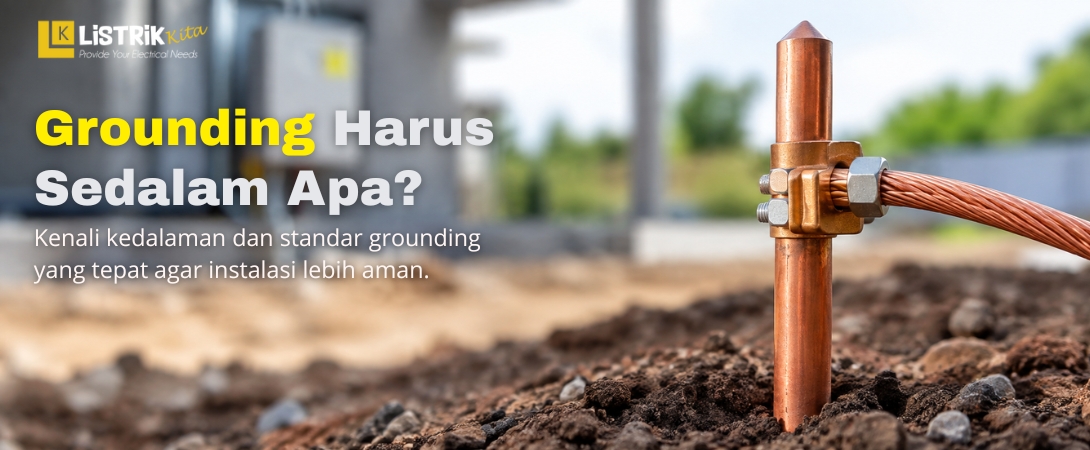
Grounding is an important part of an electrical installation. It helps provide a safe path for fault current to flow into the earth and can reduce the risk of electric shock and equipment damage. Because of this, grounding should not be installed randomly. One common question is, how deep should grounding be to be safe?
There is no single depth that works for every installation. The required grounding depth can depend on the electrode type, soil condition, moisture level, electrode material, and applicable electrical standards. This means deeper grounding is not always automatically better. The main goal is to achieve a grounding system with resistance that meets the needs of the installation.
What Is Grounding and What Does It Do in an Electrical System?
Understanding Grounding in Electrical Installations
Grounding, also known as earthing, is a system that connects certain parts of an electrical installation to the earth through conductors and grounding electrodes. It provides a path for fault current to flow into the ground, helping reduce the risk of current passing through a person.
Grounding is commonly used in homes, buildings, electrical panels, and industrial facilities. It needs to be properly designed and installed so it can work effectively during an electrical fault.
How Grounding Protects People and Electrical Equipment
One of the main purposes of grounding is to help protect people from electric shock. It can also help protect electrical equipment from certain electrical faults, leakage currents, and overvoltage conditions.
A proper grounding system also supports the operation of protective devices such as circuit breakers and other electrical protection equipment when a fault occurs. This helps improve electrical safety and reduce the risk of equipment damage.
The Relationship Between Grounding Depth and Soil Resistance
Electrode depth is related to soil conditions and grounding resistance. Good contact between the electrode and suitable soil can help create a more effective grounding path.
However, depth is not the only factor that matters. Ground resistance should still be measured to determine whether the installed system meets the requirements of the electrical installation.
Common Types of Grounding Systems
Rod Grounding
Rod grounding uses a metal electrode that is driven or installed into the ground. It is widely used because the installation is relatively simple and does not require a large area.
If the measured resistance is still too high, additional electrodes can be installed with suitable spacing and configuration.
Plate Grounding
Plate grounding uses a flat metal electrode installed in the ground. This system requires enough installation space and suitable soil conditions.
The required depth cannot be determined only by looking at the size of the plate. Soil conditions, system design, and installation requirements also need to be considered.
Grid Grounding
Grid grounding uses several conductors and electrodes arranged in a network. It is commonly used in large areas, such as industrial facilities and electrical installations with more complex grounding requirements.
Grid design usually considers the area size, soil characteristics, fault current, and safety requirements of the installation.
Factors That Affect Grounding Depth
Soil Type and Resistivity
Different types of soil have different electrical characteristics. Soil with lower resistivity generally provides better conditions for an effective grounding path than highly resistive soil.
For this reason, electrode depth should be considered together with the actual soil conditions at the installation site.
Soil Moisture Around the Electrode
Moist soil generally has better conductivity than very dry soil. Changes in soil moisture throughout the year can also affect grounding resistance measurements.
Grounding Electrode Material and Size
The material, length, diameter, and surface area of the electrode can affect grounding performance. The electrode should be selected according to the installation design and environmental conditions.
Installation Area and Environment
The installation location also matters. A site with limited space may require a different grounding approach compared with a facility that has plenty of land for a larger grounding system.
Grounding Installation Standards
Grounding installations should comply with applicable electrical standards and requirements. Therefore, grounding depth should not be based only on common field practices. Calculations, measurements, and technical requirements should also be considered.
How Deep Should Grounding Be to Be Safe?
Common Grounding Rod Depth
There is no single depth that can be considered safe for every situation. A grounding rod can be installed to a depth determined by the system design, soil conditions, and required grounding resistance.
In practice, a longer electrode can increase contact with the surrounding soil. However, if the soil has poor characteristics, simply installing the rod deeper may not be enough. Additional electrodes or another grounding configuration may be needed.
Plate Grounding Installation Depth
For plate grounding, system performance does not depend only on how deep the plate is installed. The electrode surface area, soil type, moisture, and installation arrangement also affect the final result.
For this reason, plate grounding should be installed based on the site conditions and appropriate system calculations.
Grid Grounding Depth and Arrangement
For grid grounding, depth cannot be separated from the arrangement of the conductors and electrodes. The system is designed to provide better fault current distribution and help keep surface voltage within safer limits.
For large electrical installations, grid grounding should be designed by qualified personnel who understand grounding systems and electrical safety requirements.
Is Deeper Grounding Always Safer?
Depth Is Not the Only Factor
Installing an electrode deeper does not automatically make a grounding system safer. Soil conditions, electrode type, number of electrodes, system configuration, and connection quality also have a major impact.
Why Grounding Resistance Should Be Measured
One way to check the condition of a grounding system is to measure its resistance using an appropriate measuring instrument. The measurement results can help determine whether the system is performing as required or needs improvement.
When Should a Grounding System Be Improved or Add More Electrodes?
If measurements show that the grounding resistance is too high or the system condition has changed, improvements may be necessary. Additional electrodes, a different configuration, or improved connections can be considered based on the inspection results.
Tips for Maintaining a Safe Grounding System
Use the Right Grounding Electrodes
Choose grounding electrodes and materials that match the installation requirements and environmental conditions.
Check Grounding Connections and Conductors
Loose connections, corrosion, or damaged conductors can reduce the effectiveness of a grounding system.
Measure Grounding Resistance Regularly
Regular measurements can help identify changes in grounding performance, especially for systems that have been operating for a long time.
Make Sure the Installation Meets Applicable Standards
Grounding is an important part of electrical safety. Make sure the system is installed correctly and follows the applicable electrical standards.
For safer and more reliable electrical installations, make sure you use electrical equipment that matches your system requirements. You can find a wide range of electrical products for residential, commercial, and industrial applications at Listrik Kita. Choose products based on their specifications and your installation needs to support a reliable electrical system.
