


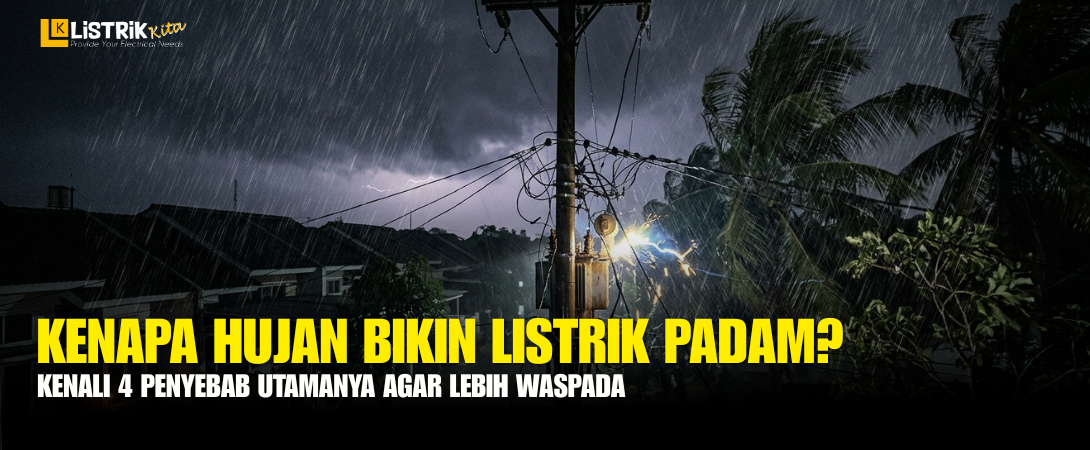
Every time the rainy season arrives, complaints about power outages feel like an annual tradition that is hard to avoid. When heavy rain pours down, it is not only outdoor activities that get disrupted, but the electricity supply at home often goes out as well. This situation is certainly frustrating, especially for those who work from home or rely on electronic devices that need a stable power supply. So why is electricity so prone to shutting off when it rains? It turns out there are several technical and natural factors that cause this problem.
Fallen Trees Hitting Power Lines
One of the most common causes is large trees falling onto power lines. Prolonged heavy rain is usually accompanied by strong winds. This condition makes the soil softer and looser, causing tree roots to lose their grip. When a tree finally falls, the power lines that stretch along the roads, especially medium voltage networks, are the first to be affected.
The impact is not just a simple power cut. When a line breaks due to a fallen tree, sparks or short circuits often occur, which can damage distribution equipment at the nearest substation. It is also common for the tree removal process to take quite some time because workers must ensure the area is completely free of electrical current before starting the cleanup. This is why power outages caused by fallen trees tend to last longer compared to other types of disruptions.
Flooding Submerging Electrical Installations
Flooding poses a serious threat to electrical infrastructure, especially in urban areas where drainage systems are inadequate. When floodwaters rise and reach substations, distribution panels, or even household electrical connections, utility workers are forced to take drastic action by shutting off power.
This decision is not made without reason. Water that contains various conductive particles can act as a medium for electricity. Leaving electrical installations active while submerged would create fatal risks, such as electrocution for residents wading through the water. Additionally, electrical equipment that remains powered while flooded is at high risk of permanent damage, which can be extremely expensive to repair. By proactively shutting off the power, workers are actually protecting the public while also saving valuable distribution assets.
Heavy Rain Accompanied by Lightning
Believe it or not, lightning strikes are one of the most common reasons for power outages, even if they only last for a moment. When lightning hits a ground wire or a utility pole, it creates an extremely high voltage surge. This surge cannot simply be absorbed by the regular electrical system.
At every distribution substation, there is a device called a Lightning Arrester designed to protect equipment from lightning strikes. When a voltage surge occurs due to lightning, this device automatically cuts off the power flow to safeguard other components inside the substation. As a result, even if only briefly, the electricity supply to homes gets interrupted. The challenge is that lightning often strikes more than once. During a single heavy rain event, multiple strikes can occur, causing the protection system to activate repeatedly and delaying the restoration process.
High Rainfall Triggering Land Movement and Landslides
Extreme rainfall also triggers another less visible danger: soil movement or landslides, especially in hilly areas and slopes. When the ground shifts, the foundations of utility poles are affected. Poles can move from their original positions, lean, or even collapse.
What makes this type of disruption even more complex is when landslides occur in areas with underground cable networks. Unlike overhead lines where damage is easy to spot, underground cables that break due to soil movement require a much more complicated detection process. Workers must locate the fault using specialized equipment, dig into the suspected area, and then perform the cable splicing. This process naturally takes much longer than repairing overhead lines.
Tips for Dealing with Power Outages During the Rainy Season
Looking at the various factors above, it is clear that power outages during rain are often beyond the control of utility workers. However, that does not mean we cannot prepare. Facing the rainy season, there are several steps you can take at home to stay ready.
First, make sure sensitive electronic devices such as computers, televisions, and refrigerators are connected to a stabilizer or surge protector. This helps protect them from voltage spikes when the power comes back on. Second, prepare emergency lighting such as portable LED lamps or flashlights that run on batteries. Candles are less safe to use, especially during windy conditions. Third, ensure that your home's electrical capacity matches your power needs, especially if you frequently add new electronic appliances.
Equally important, always have quality electrical backup equipment at home. Good quality extension cords, reliable power outlets, and additional safety devices are essential to keep your home's electrical system safe during the rainy season.
Facing the rainy season with all its challenges, having reliable electrical equipment is no longer just an option but a necessity. Therefore, make sure you get quality products that are guaranteed to be safe. Listrik Kita is here as a trusted solution to meet all your household electrical equipment needs.
From quality power outlets, MCBs, to surge protectors that safeguard your valuable electronics from voltage spikes when power returns. Everything is available at Listrik Kita. Visit Listrik Kita now and ensure your home remains safe and ready to face the rainy season.
