


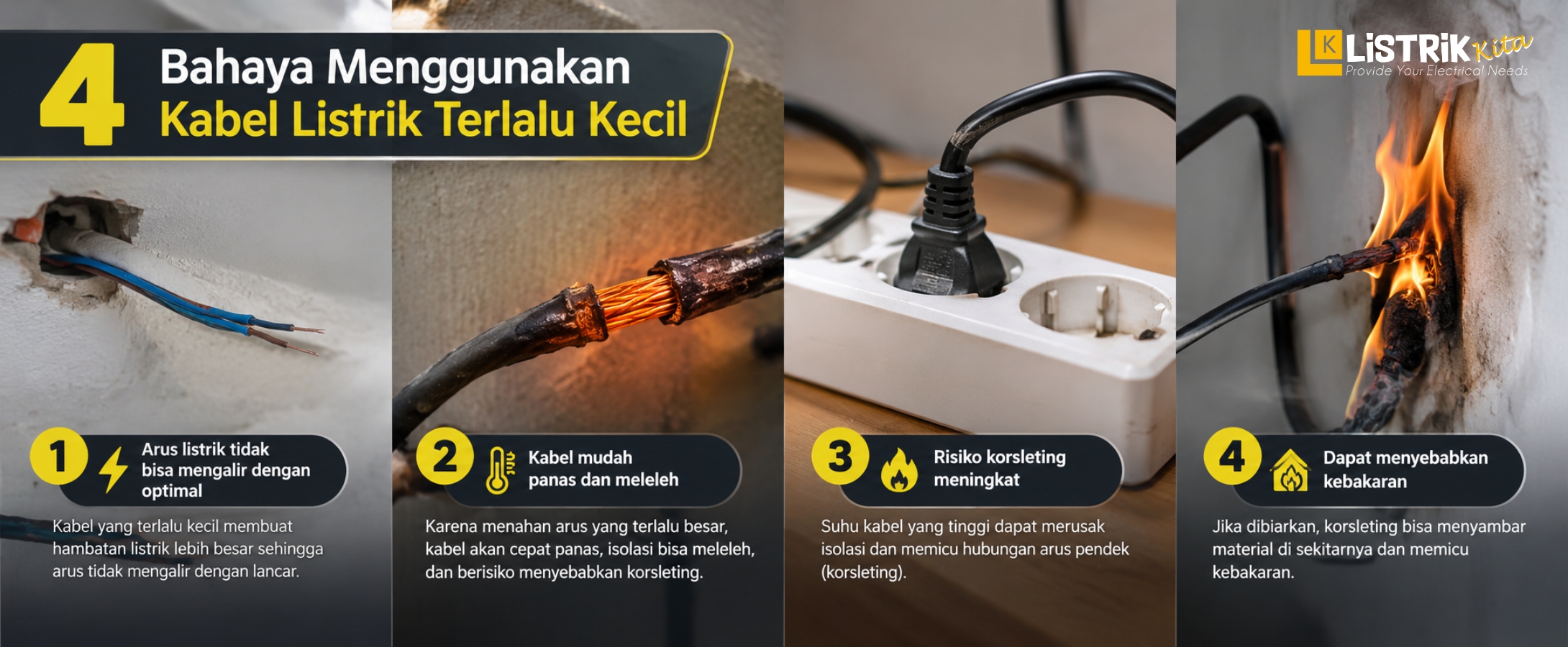
When installing electrical systems at home, cable size is often treated as a simple detail. In fact, choosing a cable that does not match the electrical load can cause several problems, from overheating to an increased risk of fire. Listrik Kita is an Extrana partner that provides original products with warranty, making it easier to find electrical cables for different installation needs.
Every electrical cable has a certain capacity for carrying current. The higher the electrical load, the more important it is to choose the right cable size. Using a cable that is too small for a high load can make the cable work beyond its intended capacity.
Why Is Electrical Cable Size Important?
Electrical cable size usually refers to the cross-sectional area of the conductor, measured in mm². This measurement affects the cable's ability to carry electrical current.
When a cable carries more current than it is designed for, resistance in the cable can produce heat. If this continues for a long time, the cable insulation may become damaged and create problems within the electrical installation.
For this reason, cable selection should not be based only on price or physical appearance. The type of load, current, cable length, installation method, and protection system should also be considered.
Fatal Risks of Using Undersized Cables
1. The Cable Can Overheat and Melt
One of the signs of an improperly sized cable is excessive heat. A cable that is too small has to work harder when carrying a large amount of current.
If the heat continues for a long period, the cable insulation may become soft, damaged, or even melt. This can reduce the insulation's ability to protect the electrical conductor.
Damaged insulation can also make the cable more vulnerable to short circuits. Therefore, a cable that becomes unusually hot during operation should not be ignored.
2. Increased Risk of House Fires
An undersized cable carrying a high electrical load can generate excessive heat. If the condition is not addressed, the cable insulation may become increasingly damaged.
Excessive heat can also affect components or materials around the cable route. Under certain conditions, this may increase the risk of fire.
Using the correct cable size is an important part of creating a safer home electrical installation. The cable should also be combined with suitable protection devices and proper installation methods.
3. Voltage Drop
Another possible problem is voltage drop. A cable with a smaller cross-sectional area has higher resistance than a larger cable under comparable conditions.
When current flows through the cable, some energy is lost because of this resistance. The effect can become more noticeable when the cable run is long or the electrical load is high.
Voltage drop can cause some electrical equipment to operate below its expected performance. This is why cable length and load should also be considered when selecting cable size.
4. Lower Energy Efficiency
Electrical resistance causes some energy to be converted into heat. In a properly designed electrical installation, this loss can be kept under control.
However, it is important to understand that a small cable does not automatically make your electricity bill increase significantly. Electricity costs are mainly determined by how much energy your electrical equipment consumes. Energy losses in the cable may add to consumption when they become significant.
Common Household Cable Sizes
Cable sizing should follow applicable electrical standards and technical calculations. For household installations, some commonly used cable sizes include the following.
1.5 mm² Cable for Lighting
A 1.5 mm² cable is commonly used for lighting circuits and other light loads. It can be used for household lighting installations based on the design and calculation of the electrical system.
Even for lighting applications, the cable's current-carrying capacity, cable type, installation method, and protection devices should still be considered.
2.5 mm² Cable for General Outlets
A 2.5 mm² cable is commonly used for general household outlet circuits. These circuits can supply equipment such as televisions, computers, and other household appliances within the capacity of the circuit.
Avoid connecting too many high-power appliances to the same outlet circuit. The total load should always be considered to help keep the installation safe.
4 mm² to 6 mm² Cable for Higher Loads
Electrical equipment with higher power requirements may need a larger cable size. Examples include high-power water pumps and water heaters.
A 4 mm² to 6 mm² cable may be suitable depending on the electrical installation calculation. However, these sizes should not be treated as a fixed rule for every water pump or water heater. Current, equipment power, cable length, installation method, and installation conditions still need to be considered.
Do Not Choose Cable Size Randomly
Match the Cable to the Electrical Load
Cable selection should be based on the requirements of the electrical installation, not simply on the cheapest or easiest option to find. Make sure the cable capacity matches the current that will flow through it.
The MCB and other protection devices should also be selected according to the electrical system. Using the right combination of components helps the installation operate safely and properly.
Consider the Installation Conditions
Cable length, installation method, ambient temperature, and the number of cables installed along the same route can affect the cable's current-carrying capacity.
If you are unsure about the right cable size for a specific application, the calculation should be carried out by someone with proper electrical installation knowledge. Avoid taking unnecessary risks simply to reduce the initial cost of the cable.
Choosing the right cable size is an important step in maintaining the safety and reliability of a home's electrical installation. Saving money by choosing an undersized cable can lead to bigger problems later.
For your electrical installation needs, you can buy Extrana cables at Listrik Kita. Listrik Kita is an Extrana partner that provides original products with warranty. Find Extrana cable options that match your installation needs and make sure the cable is selected based on the electrical load and proper technical calculations.
